Signs of the Apocalypse #2: What’s an apocalypse for?

Image is “The Unveiling” by Peter Kaminski on Flickr [CC BY 2.0]. I have no idea what’s under there]

Apocalypse literally means “to unveil.”  It’s the opening word of the Book of Revelation, a revealing.  The writer lifts the veil from the world we see to reveal things as they really are. 

Being killed is not the worst thing that can happen to you in Revelation.  The worst is being seduced, giving ourselves over to forces that will destroy us.  Power is seductive in Revelation.  I can think of no other biblical book that deals with the toxicity of power like Revelation.  The seduction in Revelation is to confuse power with truth, worthiness, or righteousness.

You’ve probably heard the quote, “If you really want to test a man’s character, give him power.”  You’ve probably also heard, “Adversity doesn’t build character, it reveals it.” 

Apocalypse means “to unveil.”  We’ve had a lot revealed lately. 

We’ve had pastors reveal their willingness to compromise principle to be near power.  They’ve replaced loyalty to principles with loyalty to a president.

Our Supreme Court confirmation process has revealed a Senate majority leader willing to make his own rules for partisan advantage.  Because who’s going to stop him? 

The pandemic has revealed how politicians will pressure public health officials, compromising science to benefit the politics.

The president has revealed his unworthiness for the office in his expectation that the government will serve his personal interests, rewarding his friends and punishing his enemies.

We’ve seen a revelation about ourselves as a people.  The problem with the president is not his incompetence, his racism, or his lies.  There are incompetent racist liars everywhere.  The problem is that people vote for him.  People uncritically accept his words and interpret his wealth as a sign of his worthiness and credibility.  He’ll protect them from their shared enemies.  People have been seduced.  Seduced into believing that if you have power, you don’t need law.  Seduced into believing that wealth and the power that comes with it are signs of righteousness.

Apocalypse means “to unveil.”  This is an apocalyptic moment not because of what’s being destroyed, but because of what we’re learning. We haven’t made the progress we thought we had against racism, sexism, or any other ism.

– Our Constitutional government isn’t a set of rules, it is a discipline that must be practiced by the governing and the governed.  It’s only as good as our willingness to live by it.
– People will trade uncomfortable facts for great-sounding lies.
– We are looking for permission to give in to our dark sides and we will enable those who grant it.

I am on the record as opposing comparing people to Hitler and the Nazis.  What I really oppose making those comparisons as a first resort, reflexively, without thinking.  I have been thinking and I want to bring up the Nazis.  Work with me. I grew up hearing that Hitler was an evil genius who bent Germany to his will through brilliant oratory and sinister propaganda.  He repeated his lies often enough that people were programmed into believing them.  Hitler supposedly carried out an evil plan on an innocent population.

I think that’s garbage.  I think Hitler told people what they wanted to hear.  I don’t think he was brilliant, just a slick salesman, giving people permission give in to their dark sides.  People believed his lies because they wanted to.  They believed it all the way into a world war that destroyed the country.

Apocalypse means “to unveil.”  The point of revealing is to recognize and resist the seduction of power.  The people in Revelation 13 marvel at the beast and worship it.  But the beast and its followers are destined for a lake of fire.  The kind of power the beast represents does not come from God and is destined for destruction.  Yet we continue to see that kind of power as worthy, virtuous, even godly.  The most important revelation in Revelation is our capacity to give ourselves over to what will destroy us.

These are apocalyptic times.  See what the times reveal.  That’s my take.  In 666 words.

Signs of the Apocalypse #1: What if Jeffress was right?

[Image is “The antichrist drives a BMW” by gus bus on Flickr [CC BY-SA 2.0]. I thought he’d drive something sportier.]

So many comparisons between 2020 and the apocalypse. And maybe they’re right. Look at what’s happened:

  • A world-wide pestilence, disrupting the everything we consider normal parts of life.
  • So much of the west coast is on fire that we see the smoke on the east coast.
  • Hurricanes causing flooding along the Gulf coast. So many of them we’ve used up the English alphabet and we’re into the Greek. There is no plan for what happens if we use up the Greek alphabet.
  • Upheavals and divisions in politics like never before, politicians grooming their followers with falsehoods, and the two sides can’t agree on what facts are.
  • And all of this is hitting us at the same time.

I think Robert Jeffress, one of the president’s go-to pastors, may have been right in his 2014 book Perfect Ending, that president Barak Obama was preparing the country for the Antichrist.  In an interview for the National Catholic Reporter, Jeffress didn’t call Obama the Antichrist, “But what I am saying is this: the course he is choosing to lead our nation is paving the way for the future reign of the Antichrist.”  Maybe Jeffress was right.  Maybe that’s what happened.

I heard John Hagee, a San Antonio pastor, explain how all this will come about.  He said things would get so bad that we’d turn everything over to a dictator – the Antichrist, quite literally an agent of Satan, who would seem to set things right, but in fact would be paving the way for the worst time in human history – The Great Tribulation.  Jeffress makes a similar statement in the interview quoted above, “‘. . . Americans are willingly giving up their freedom for what they’re told is a greater good,’ he said. ‘A future world dictator will assume power under the guise of the greater good of the world.’”

It’s clear that Jeffress and those like him thought that Obama had done terrible things as president, things like allowing same-sex marriage and the passage of Obamacare.  We were headed to socialism in a handcar.  Then along comes Mr. Donald “I alone can fix it” Trump.  He’s the one who will save us from socialism, from foreign hordes streaming across the border illegally, from the gun grabbers, the baby-killers, and anyone else out there to take what’s ours.  We can say a lot about appointing judges and Supreme Court justices, a lot about banning abortion, and a lot about tax policy, but we are going through a time of major societal change and there are people who are afraid their world will be swept away by it.  Literally afraid.  For them, the upcoming election is literally about their survival.  They’ll tolerate a lot of constitutionally and morally sketchy things from someone who will save their lives.  Things are bad and we now have a leader, a chosen one, doing a lot of sketchy things in the name of making the country great again. A deliverer.  Do you see the pattern?

Are Hagee and Jeffress players in their own scenario?  Are they enabling the thing they warned us about?  The most ironic outcome is often the most likely.  Much of what they say about antichrist comes from Revelation 13, but there is a less-popular figure there, too.  It’s often called the False Prophet and it forces everyone to worship the Antichrist.  I’m not calling anyone any names, but if Trump fits the antichrist pattern, then we should look for a false prophet.  It’s there in Revelation.

I wonder why a movement that teaches us that Satan’s agent will work through politics has been so careless with its loyalties.  In referring to antichrist, the letter of 1 John tells us to “test the spirits to see whether they are from God; for many false prophets have gone out into the world” (1 John 4:1).  Don’t be too eager to follow what feels good, what confirms your prejudices, what makes you feel safe.  In Revelation, it’s the seductive things that lead us to our doom.  So that’s my take.  In 666 words.

Random Thursday for January 31, 2019

Unrelated items, in no particular order


I didn’t realize Charlie Cox, who plays (played) Daredevil on Netflix, was British.  Here’s other performers who had me fooled:

  • Rachel Taylor, who plays Trish on Jessica Jones, is Australian.
  • So is Eka Darville, who plays Malcom on the same show.
  • Yvonne Strahovski, Serena Joy on The Handmaid’s Tale, is also Australian.
  • Max Minghella, who plays Nick on the same show, is British.
  • So is Dominic Cooper, the title character from Preacher.
  • So is Tom Payne, who played Jesus on The Walking Dead.  I already knew about Andrew Lincoln and Lennie James.

Joseph Fiennes on The Handmaid’s Tale is also British, but I remember him from Shakespeare in Love, so he didn’t have me fooled.  I must find an American actor or actress I thought was British.


I’ve learned about the “deepity.”  According to Daniel Dennett:

A deepity is a proposition that seems to be profound because it is actually logically ill-formed.  It has (at least) two readings and balances precariously between them.  On one reading it is true but trivial.  And on another reading it is false, but would be earth-shattering if true.

Examples include:

If this has you interested, check out this article, that unpacks some deepities for you:  https://quillette.com/2018/10/16/deepities-and-the-politics-of-pseudo-profundity/


New York Magazine published an article on the top 100 pens.  I don’t know which is worse:

  • I’m proud that I use the #1 pen, the Baron Fig Squire. I even wrote the draft for this blog with it.  Worth the money.
  • Multiple Facebook friends shared the article, what does that say about us?
  • My actual favorite pen, the Lamy Safari fountain pen, is #62.  No one will ever steal this pen.


Everyone will be the antichrist for 15 minutes

antichrist history and destiny

Everyone will be the antichrist for 15 minutes.

A prominent feature of American evangelicalism is a theology called dispensationalism.  It was popularized by the Left Behind series and has become What the Bible Says when interpreting Revelation.  The antichrist is the beast described in Revelation 13:1-10, Satan incarnate, a ruler who will turn the world into a living hell before Christ returns to defeat him.

Nearly every pope, American president, and Russian (or Soviet) leader has been called the antichrist at least once.  Barak Obama got a lot of that.  Robert Jeffress, the senior pastor of Dallas’s First Baptist Church,  was careful not to say that Obama was the antichrist, but that he would pave the way for him, saying, “The course he is choosing to lead our nation is paving the way for the future reign of the Antichrist.” I heard another preacher give the standard dispensationalist script on the antichrist.  He said things are going to get so bad that we’ll turn over all our freedom to a dictator – the antichrist, Satan incarnate.

I don’t buy into this, but I could make a case we’re following that preacher’s timeline right now. Our current president said he’s inherited a mess and he’s the only one who can fix it. His followers seem to agree, or don’t disagree enough to speak up. He’s frustrated with the limits of presidential power. The narrative seems to fit that TV preacher’s scenario, but that preacher doesn’t think the president is the antichrist because they have the same politics. Jeffress has moved from a president paving the way to antichrist to a president as an instrument of God. He assumes everyone else will enable the antichrist, but not him. I’m not suggesting anyone is the antichrist. I am asking why a movement that preaches how Satan will emerge by way of politics is so careless with its loyalties.

We now have permission to give in to our worst selves. The president supported violence at his campaign rallies. The alt-right (and many others) interprets his weak condemnation of Charlottesville as support.  We’re free to demonize immigrants.  One of the core truths of the Christian faith is to recognize how we are our own worst enemies, how we oppose what is best for us.  The very people who should be reminding us of that are embracing it.

Maybe this is Jeffress’s 15 minutes. Not as the antichrist, but as another figure from Revelation 13, the one dispensationalists call the false prophet. According to the scenario, he’s the one who persuades us to worship the antichrist. To be clear, I don’t accept the dispensational scenario. But they do. And the way things are going, they seem to fit their own scenarios very well.

(Image is “Antichrist:  History and Destiny” by “Michael Coghlan” on FlickrCC BY-SA 2.0.  I didn’t go inside.)

Random Thursday for October 13, 2016

Unrelated comments, in no particular order

Happy Birthday to my good friend Teri Harrington!

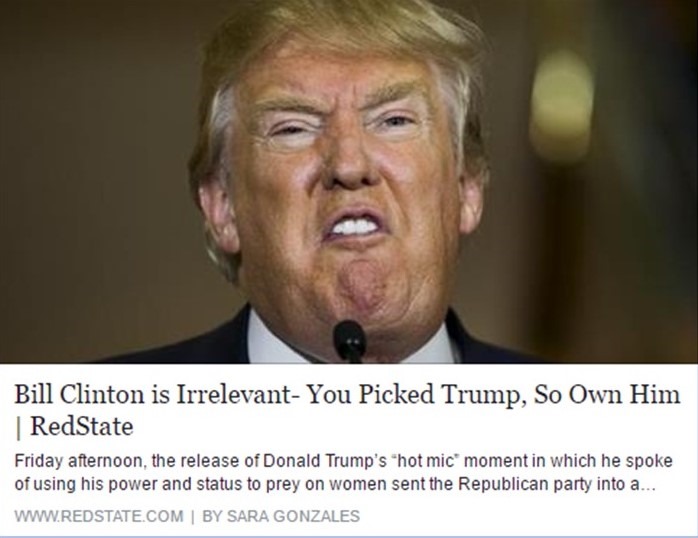
If you’ve read these before, you know I’m neither a conservative nor a Trump supporter.  This blog is about the hard work you have to do to arrive at the best answers and I want to give credit to people who are doing just that.  Please take the time to read this conservative blog post, which I think offers both clarity and a call to responsibility.

trump - you own him

Kelly Oxford asked women to share stories of their sexual assaults under the hashtag #NotOkay.  The response exceeded everyone’s expectations.  Maybe this will create the kind of change we need.

image

Observations on Youth Ministry, Part 3–Getting the Right Metaphor

15500604350_ae5657a6b2_z

When rebooting a youth program, people want someone who can come in with a lot of charisma and produce programs with such magnetism that no one can resist their attractive force.  During my time in the private sector, I repeatedly encountered managers who thought that bringing in that one software package, that one consultant, or that one productivity initiative was going to solve everything.  The software, the consultants, and the initiatives could not match the expectations, because the managers wanted something that would bring change without effort.  To change an organization, you must change yourself.

When talking about the magnetic pull of programs, someone is bound to say, “If you build it, they will come.” I used to say it.  But I’ve learned that’s only a line from a movie.  The scriptwriters arranged the story so the words would come true.  Good programs are important, but they don’t generate enough magnetic pull on their own.

The key phrase is not “If you build it,” but “critical mass.”  It takes a certain number of people committed to making “it” work.  Here’s where we need to change our thinking: the “it” is secondary to the commitment to do “it”.

I hear food metaphors are the most effective, but we have to use the right one.  We think the metaphor is a restaurant. You have choices, but the chef has to put food he thinks you want on the menu. If you don’t see anything you like, you eat somewhere else. If the chef makes the right choices consistently, people come to the restaurant. The whole thing hinges on the chef making the right offer.  Restaurants may work that way, but not ministries.  Ministries are community meals. I have a kitchen where we can cook together.  Everyone comes together, everyone brings ingredients, and everyone cooks. Together we figure out better ways to cook and together we enjoy eating what we have prepared. We need enough people to bring enough food to make a meal.  We need enough hands to prepare the meal.  Sometimes the simplest meals are feasts when we enjoy them with our friends.  It is more important to commit to come together and eat than it is to have the right menu.

Einstein is supposed to have said, “We cannot solve our problems with the same level of thinking that created them.”  Thriving ministries constantly evaluate and adapt.  They embrace what works, abandon what doesn’t, and constantly dig deeper to try to distinguish between what appears to be true and what actually is true.  Getting the right metaphor helps describe the situation, gets everyone thinking the same direction, and secures that common commitment.  I’ll do a common meal with the youth to drive home the point.

(Image is “1407wk7123bur” by “Wiesia” on FlickrCC BY-NC-ND 2.0.  I don’t know these kids.)

Observations on Youth Ministry, Part 2 – Not Your Father’s Christianity

As I talk with my fellow youth directors, I see issues in my ministry inherent to all youth ministries, at least those in suburban, upper-middle-class churches.  What you’re reading is my attempt to work through it.  Your comments and insights are appreciated.

Overwhelmed

The issues are no surprise.  High schoolers are overcommitted, over-scheduled, and over-homeworked.  (It’s a word now.)  Church is one activity among many and it’s one with few consequences attached to it.  If you don’t make practice, you don’t play in the game.  If you don’t make rehearsals, you don’t sing the solo.  You don’t lose much if you miss church.  You’re welcomed back if you haven’t been there in a while.  (We desperately want you to come back.)  High schoolers join certain activities to build a resume for college.  I’m not sure what place church has in that resume.

My parents came up during the 40s and 50s.  The picture they painted for me was that church made for an orderly society.  Good Christians were good citizens, orderly and respectful of authority.  Back in 1993, I heard one of William F. Buckley’s Firing Line debates on the proposition “We have nothing to fear from the Religious Right.”  Buckley’s opening and closing statements were about how orderly our society would be if we followed the principles championed by the Religious Right.  The debate itself never addressed that point.  I heard it from my parents and others, Christianity was valuable enough that if it didn’t exist, it would have to be invented.

If Christianity is such a useful tool that its absence would require its invention, maybe that’s what we did.

Not that we invented Christianity, but we invented the Christianity we practiced.  The Buddhists tell us, “If you meet the Buddha on the road, kill him.”  That Buddha would not be the true Buddha, but one’s own idea of what the Buddha should be, an invented Buddha.  One must kill the invented Buddha to find the real one.  What we’re experiencing today may be the consequences of our invented Christianity.  Church ties on the resume are no longer the credentials of the well-mannered ideal citizen.  If the object is to develop an intelligent, socialized, and productive citizen, there are other ways to do it.

So . . . what does that mean for youth ministry?  I’m not entirely sure; I’m blogging to help figure it out.  Here are some random thoughts in no particular order.

Instead of asking how the church can compete, maybe we should ask what it means to think the church must compete.  Our Christian faith should be the eyes we look through to evaluate everything else.  Christianity must speak to the fundamentals of being human, not how to thrive in the social system we invented.  That’s oversimplified, but it’s my starting point.

We need to find a way to get teenagers to step back and look at life at a time when they’re struggling to find a place for themselves.

We need to be clear to ourselves about what we intend to accomplish.  I want my youth to know there is a God who loves and cares for them, who is as close to them as their breath, and who is with them always.  I want them to have ways of getting in touch with the spiritual resources available to them for comfort and for guidance.  I want them to be able to look back on a time when instead of talk about God, there was God.

This is a work in progress, an ongoing conversation and internal debate.  I’d appreciate your comments.

(Image is “Overwhelmed” by Walt Stoneburner on Flickr.  CC BY 2.0.  I haven’t met this young lady.)

Observations on Youth Ministry, Part 1

watson 2

I’ve passed the four month mark as a youth director, so I thought I’d share some of what I’ve learned.

I’ve learned the names, grades, and schools.  I’m starting to learn more of the back stories.  I am impressed by the youth and the adult volunteers I’m working with.  I’m thankful to be working with them.  I’m not just saying that.  If I thought otherwise, I wouldn’t write anything.

Youth ministry is like a performance.  A colleague of mine compared it to playing a sport.  You spend the week preparing for the weekend, you put your best plan together, you review and rehearse, and then you execute and hope things go according to plan.  Which may or may not happen.  I’ve had my share of both.

As you might expect, a lot of this job is about relationships.  Those are still a work in progress.  I’m an Air Force brat and I spent most of my childhood moving around.  I developed instincts about being the new guy that served me well when I was in the private sector.  You can’t get too familiar too soon.  You knock on the door, but you have to spend some time waiting on the porch.  People will open the door, but that isn’t an invitation to come inside.  I’ve seen people mistake an open door for an invitation, but that makes the wait longer.  This is not because I’m dealing with youth.  It doesn’t matter if you’re 15 or 55, it’s human nature.  As a youth worker, you have to learn patience and to believe in yourself.  This is why seminary stresses having sources of spiritual support that don’t depend on how the ministry is going.  I have no complaints; I’ve received a very positive reception from everyone.  We still need time to get used to each other.  I think things are on schedule, it just takes time.

I didn’t expect to feel this confident.  You learn in seminary that you must develop good instincts and then trust them.  Seminary professors walk the line between challenging you and telling you to trust yourself.  You challenge yourself because you don’t know everything and you trust yourself because you answered a call from God.  I had to challenge and trust myself back when I was an engineer, but I find it easier now to stand for what I think is best and to listen to other viewpoints.  (That last comment will come back to haunt me).  I try to be respectful in saying what I think, but I do say it.  I find it easier to do than before.

Finally, youth ministry is like selling dog food.  It’s important for the owner to buy it, but the proof of the product is if the dog will eat it.  (Please remember that I’m a dog person.  My dog Watson is a member of the family.)  A lot of parents are glad to see me, and that’s important, but the real proof lies with the youth.  Time will tell.

[Image is my dog Watson.  He tends to get his way when he uses that face.]

Telling Bible Stories After Elementary School

King David's Tomb

I’m trying to put together a Bible study on David and I am frustrated.  The resources only tell half the story, the happy half.  David was a man after God’s own heart.  David was a mighty warrior, the founder of a dynasty, and the ancestor of God’s Messiah.  He was the husband of many beautiful wives (polygamy was not unusual then), killed a lot of Philistines, and wrote a lot of Psalms.  Everyone who met David was charmed by him and would do anything for him.  That’s a good quality for a king to have.

That’s not all David does.  The happy stuff starts in 1 Samuel and stops at 2 Samuel 10, although 2 Samuel goes all the way out to chapter 24.  In 2 Samuel 11, David had an affair with another man’s wife, got her pregnant, and then had her husband killed.  Nathan the prophet called David out.  He said that because of David’s sin, the baby from his affair would die.  We’ve been led to believe that is some kind of justice, but why should the baby die for something his parents did?  

David’s affair with Bathsheba was the beginning of a long unraveling.  David’s son, Amnon, ambushed and raped his half-sister Tamar.  Did Amnon think it was OK, given what his father did?  Absalom, Amnon’s half-brother and Tamar’s full-brother, waited for the right moment and killed Amnon.  David and Absalom finally reconciled, but Absalom had bigger plans.  He led a rebellion that drove David out of Jerusalem.  David’s warriors and Absalom’s warriors fought and David’s side won.  Despite being given orders to spare Absalom’s life, Absalom was killed by Joab, David’s military commander.  David was devastated by Absalom’s death.  The long chain of consequences from David’s affair played out to this end.

I am not saying this narrative should be all we remember about David.  I am not saying that these events negate anything good David did.  I am saying that these stories never enter the popular understanding of David, but they are right there in scripture with everything else David did.  

My friend Katie recently preached a sermon on Jonah.  In talking with her as she prepared, she said the popular understanding of Jonah stops after the fish spits Jonah up on shore.  But there’s more story.  We’re stuck in a elementary school understanding of Jonah.  I think we’re stuck in an elementary school understanding of Jonah, David, and many more biblical narratives.  How can we claim the Bible when we don’t read what’s there?  How can this book shape us when we insist on understanding it as it was presented to us in elementary school?  Adults are better served by embracing the complete picture.

David is both example and cautionary tale, a story about how someone can climb so high and fall so far.  I want to lead a Bible study that gives both parts their due.  I hope we can have a church that wants to learn from both.  

That’s what I’m wrestling with at the Jabbok Ford.

(Image is “King David’s Tomb” by Israel Tourism on Flickr.  CC BY 2.0.  It’s hard to play that thing with no strings.)

Apparently not just talking to Donald Trump

By now everyone has jumped on Donald Trump’s remarks, but I want to add to a comment I made on my last Random Thursday post, based on a Facebook comment.  I wrote this:

“It used to be that saying “I’m not politically correct” was a way to try to communicate an uncomfortable truth.  Now it’s a lame excuse to give in to your dark side.  I’m talking to you, Donald Trump.”

Here’s why I wrote it:

During the Fox News presidential candidate debate, Megyn Kelly brought up the names Donald Trump has called women he didn’t like and asked him if that was the right presidential temperament (here’s the video).  Trump’s reply was that he was not “politically correct” and if Megyn Kelly had a problem, she’d have to get over it.  Trump’s problem is not a lack of political correctness, but a lack of common courtesy.  At one time, people who were not politically correct used terms like, for example, “illegal aliens” instead of “undocumented workers,” because they wanted to communicate the uncomfortable truth that these people were violating immigration laws.  Trump wants to broaden the term to allow being rude and crude.  If I call a woman a “slut” and then say, “I’m not politically correct, that’s how I am, so if you don’t like it, it’s your problem,” does that excuse my behavior?  Trump thinks it does.  I think it doesn’t.

I set a low bar for my expectations of Trump’s debate performance and he managed to go under it both in his exchange with Megyn Kelly at the debate and his tweets afterwards.

By the way, here’s something I didn’t make clear at the start.  Random Thursday is a collection of observations and thoughts that do not necessarily go together.  A Facebook comment linked two of the items, which I thought was a very clever observation, but any link I don’t explicitly spell out is unintentional.  Starting and ending with a Trump comment led some to believe this was a post about Trump, but it was not my intention to write a whole post about Trump.  Until now.

campaign in poetry

(Image is “politically correct” by Brett Jordan on Flickr.  CC BY 2.0.)